
Research
Publications
Preprints and journal articles, with short summaries and links to both published and arXiv versions.
Preprints
Open “Short summary” under any paper for a brief account.
-
The sharp threshold for Hausdorff convexification under Minkowski addition
Short summary
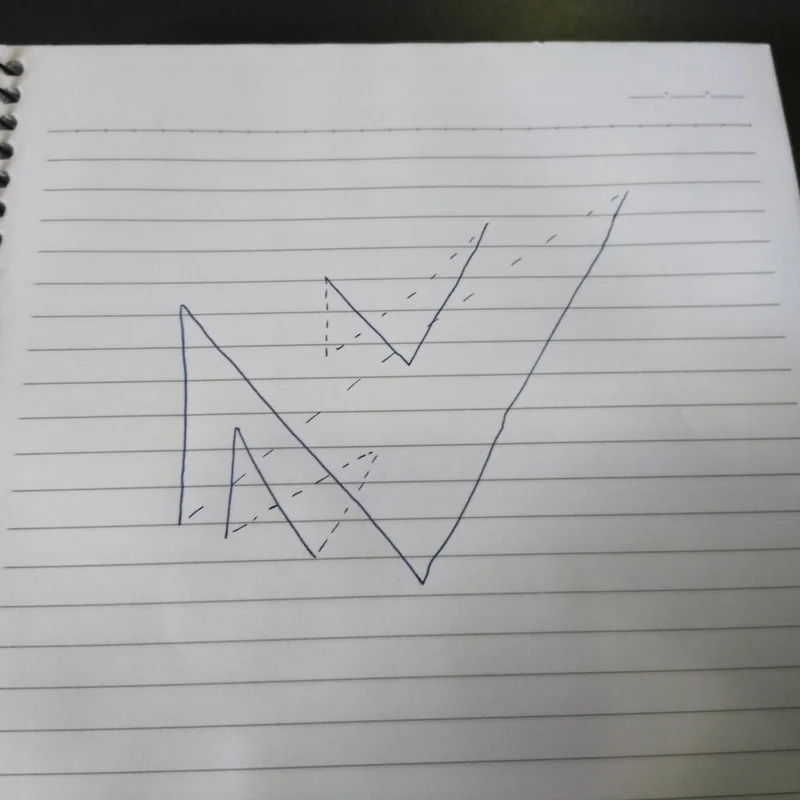
Repeated Minkowski averages need not bring a compact set closer to its convex hull in Hausdorff distance: in dimension n at least three, this can fail through the first n−1 averages. At the n-fold average, however, every compact set gets strictly closer by a uniform factor.
2026 -
From Brunn–Minkowski to Prékopa–Leindler and Borell–Brascamp–Lieb: discrete inequalities
Short summary
We prove discrete Prékopa–Leindler and Borell–Brascamp–Lieb-type inequalities for functions on ℤᵈ, provided one function is sufficiently spread across parallel hyperplanes. We also explain a general route from Brunn–Minkowski inequalities for sets to functional inequalities.
2025 -
Sharp Quantitative Stability for the Prékopa–Leindler and Borell–Brascamp–Lieb InequalitiesA place to start
Short summary
We prove a quantitative stability result for Prékopa–Leindler and Borell–Brascamp–Lieb: when equality is nearly attained, the functions are close, after suitable translations, to a common log-concave or p-concave function.
2025 -
Sharp stability of the Brunn–Minkowski inequality via optimal mass transportation
Short summary
Optimal transport gives a new proof that two nearly convex sets with a nearly minimal Brunn–Minkowski sum are close, up to translation. The transport map is built between their convex hulls, and the argument controls it even where the original sets have gaps.
2024 -
Sharp quantitative stability of the Brunn–Minkowski inequalityA place to start
Recorded talksPeter van Hintum (linear stability)Peter van Hintum (quadratic stability)Alessio FigalliMarius TibaShort summary
For 0<t≤1/2, if equal-volume sets satisfy |tA+(1−t)B| ≤ (1+δ)|A|, then each set is close to its own convex hull with an error linear in δ. After translation, both are close to a common convex set with error of order √(δ/t).
2023
Journal articles
-
Locality in SumsetsA place to start
Recorded talksPeter van Hintum (linear stability; includes Locality)Peter Keevash (isoperimetric stability; includes Locality)Short summary
We prove Freiman-type results for sets with small doubling, focusing on how few translates are needed to cover them by structured sets. An additive-hull viewpoint captures the local behaviour of their sumsets and yields covering and stability theorems.
-
Additive Bases: Change of Domain
Recorded talksBoris BukhShort summary
How does the smallest additive basis for a set change when its elements must lie in ℚ, ℤ or ℕ? Restricting rational to integer bases can nearly double the minimum size, while requiring nonnegative integers can cause a logarithmic loss. Both effects are essentially sharp.
-
On Ruzsa's discrete Brunn–Minkowski conjecture
Short summary
Ruzsa conjectured that, for finite A,B⊂ℤᵈ and any ε>0, there is an N=N(d,ε) such that if B is not covered by N parallel hyperplanes, then |A+B|^(1/d) ≥ |A|^(1/d) + (1−ε)|B|^(1/d). We prove this conjecture.
-
The sharp doubling threshold for approximate convexity
Short summary
For equal-volume A and B and 0<t≤1/2, the threshold |tA+(1−t)B| < (1+tᵈ)|A| forces the convex hull of their union, after translation, to have bounded relative volume. The threshold 1+tᵈ is sharp; we also prove a counterpart for repeated sums.
-
Sharp bounds for a discrete John's theorem
Short summary
A centrally symmetric convex progression in ℤᵈ can be enclosed in a generalised arithmetic progression at a cost of only d^{O(d)} in size. This is the discrete analogue of the size control in John’s theorem, with the correct order in the dimension.
-
Towards Hadwiger's Conjecture via Bourgain Slicing
Short summary
We link Hadwiger’s covering problem to Bourgain’s slicing conjecture. Together with its later solution, our result gives a bound of the form (4−ε)ᵈ on the number of translates needed to cover a convex body by its interior, for some absolute ε>0 and sufficiently large d.
-
Inversion of Bayesian Networks
Short summary
We derive graph-theoretic conditions under which a recognition network can exactly represent the posterior distribution of a generative Bayesian network, and identify obstructions to such exact inversion.
-
Sharp quantitative stability of the planar Brunn–Minkowski inequality
Short summary
We settle planar Brunn–Minkowski stability with sharp square-root control. The key step compares the volume missing from the convex hull of A+B with the corresponding gaps for A and B, with a constant arbitrarily close to one.
-
Sets in ℤᵏ with doubling 2ᵏ + δ are near convex progressions
Short summary
If |A+A| ≤ (2ᵏ+δ)|A| for a finite A⊂ℤᵏ, then either A is covered by a bounded number of parallel hyperplanes or its smallest containing convex progression has at most Oₖ(δ)|A| points outside A.
-
Sharp L¹ Inequalities for Sup-Convolution
Short summary
We prove sharp L¹ inequalities for sup-convolution on convex domains in dimensions up to three. They give the correct constants in a linear Brunn–Minkowski stability estimate for hypographs, including a two-function version.
-
Sharp stability of Brunn–Minkowski for homothetic regions
Recorded talksPeter van Hintum (homothetic regions)Short summary
The extra volume added by averaging a set with itself controls, linearly, the volume missing from its convex hull. This resolves a conjecture of Figalli and Jerison on stability for homothetic regions.
-
Capture times in the bridge-burning Cops and Robbers game
Short summary
In bridge-burning Cops and Robbers, an edge disappears whenever the robber crosses it. We determine the order of magnitude of the longest capture time for graphs needing at least three bridge-burning cops.
-
Radius, girth and minimum degree
Short summary
How large can the radius of a graph be when its minimum degree and shortest cycle length are fixed? We settle the exact triangle-free case, determine the right order for several larger girths, and relate the remaining even-girth problem to the Erdős girth conjecture.
-
The Eternal Game Chromatic Number of Random Graphs
Short summary
In the eternal colouring game, players keep a random graph properly coloured through indefinitely many moves. We determine its typical game chromatic number for odd order and for even order when p=1/k, and prove an upper bound for other fixed edge probabilities.
-
The (t,r) broadcast domination number of some regular graphs
Short summary
Towers on the infinite square grid transmit a signal that weakens with distance. When the initial strength is t>17 and each point must receive a total strength of at least 3, we determine the smallest possible asymptotic density of towers, settling a conjecture of Drews, Harris and Randolph.
-
Improved Bound for Tomaszewski's Problem
Short summary
Tomaszewski conjectured that at least half of all signed sums of unit-normalised coefficients fall between −1 and 1. We improve the unconditional guarantee to 0.46.
-
The bunkbed conjecture on the complete graph
Short summary
We settle the complete-graph case of the long-standing bunkbed conjecture in bond percolation, when every edge has the same retention probability.
-
Locally biased partitions of ℤⁿ
Short summary
For n≥2, we construct uncountably many non-isomorphic partitions of ℤⁿ into 2n parts in which every point has exactly one neighbour in each part. This settles a question of Gross and Grupel.